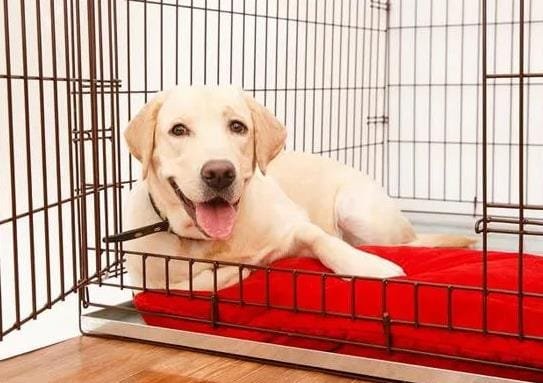
7 Steps to Gentle Crate Training: A Puppy-Proof Guide for Stress-Free Success
**7 Steps to Gentle Crate Training: A Puppy-Proof Guide for Stress-Free Success**
Let me start by sharing a little secret: When I first brought home my rescue pup, Max, crate training terrified me. I envisioned a whimpering ball of fur locked away, hating me. But here’s the truth? When done with love and patience, a crate becomes your puppy’s *safe haven*—a cozy nook they’ll curl up in for naps or when the world feels overwhelming. Yes, it takes work. Yes, there will be nights when you want to tear your hair out. But trust me, it’s worth it. Here’s how to do it right, with a whole lot of heart.
**Step 1: Turn the Crate into a 5-Star Luxury Den (Forget “Prison”!)**
My first mistake? I plopped the crate in the corner like a jail cell. *Big nope.* Instead:
– **Location, location, location:** Park the crate in a *lively spot*—like the living room where your puppy can see the action. Line it with a soft blanket and toss in their favorite stuffed toy. Think of it as their VIP suite.
– **Let them explore at their pace:** Prop the door wide open and say in your most upbeat voice, *”Hey buddy! Check out this cool fort!”* If they peek inside, reward with cheers and a treat. *(“Yes! You’re a brave explorer!”)* **NEVER force them in.** Remember: this is their castle, not a dungeon.
**My tip:** Call it their “den” or “cozy cave.” Words matter! Max perked up instantly when I said, *”Time to relax in your cave!”* instead of the cold word “crate.”
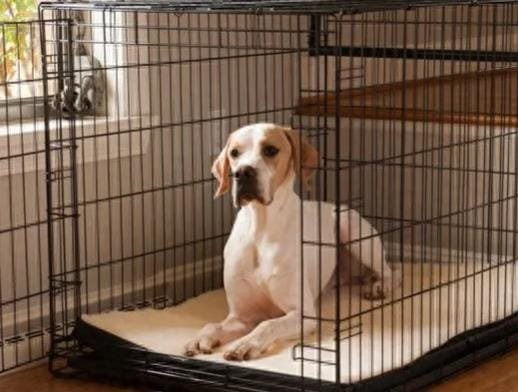
**Step 2: Bribes Are Your Best Friend (And That’s Okay!)**
Treats are your magic wand:
– **Treat tornado:** Scatter tiny, *mouthwatering treats* (think shredded chicken or cheese) inside the crate. As Max nosed in to eat, I’d quietly close the door for *10 seconds*, then pop it open and let him out. We’d repeat this game, slowly adding time. *(“Kennel up for a snack surprise!”)* His eyes lit up like a kid at a candy store.
– **Pair it with a fun word:** Use a cheerful cue like *”Bedtime!”* or *”Go to your spot!”* in an excited voice. Soon, Max would race in for his “treat party.”
**Full disclosure:** I felt guilty at first. Was I bribing him? Nope! I was building positive memories. It worked wonders.
**Step 3: Start Tiny. Celebrate Tiny Wins.**
New parents don’t expect a baby to sleep through the night instantly.同理, don’t expect miracles:
– **Micro sessions:** Begin with *2-minute stints* multiple times a day. Sit nearby and read a book. When Max stayed calm, I’d swoop in with praise *(“Good relaxin’!”)* and a tiny treat.
– **Slow and steady:** Once he’d chill for 5 minutes, I’d add 2–3 minutes at a time. *(“You got this, little dude!”)* **NEVER leave him alone for hours at first.** You’re building trust, brick by brick.
**Key lesson:** End each session on a high note. Open the door with a smile and say, *”Job well done! Time to play!”*
**Step 4: Nighttime? Keep It Zen (Not Chaotic)**
This was the hardest. Max’s howls echoed through the house, and I wanted to cave. Here’s what saved us:
– **Drain their energy:** A tired puppy is a sleepy puppy. Take a *short, calm walk* before bed (no zoomies!) and let them potty.
– **Cozy night setup:** Move the crate to your bedroom (or just outside the door) with a soft nightlight. Tuck in a *long-lasting chew* (like a frozen Kong) and play gentle classical music. *(Yes, I know it sounds weird, but the vet swore by it!)*
– **The art of ignoring:** If they whine softly, resist the urge to rush in. Dogs learn self-soothing. *(I know, it feels cruel, but trust the process).* **BUT:** If they’re screaming hysterically, check for needs (potty? hurt?). Then return them to the crate calmly without eye contact or fuss.
**My dark moment:** Night 3, Max cried for 45 minutes. I wanted to give up. But by week 2? Peaceful nights. Patience pays off.
**Step 5: Letting Them Out? Keep It Mellow**
Avoid creating anxiety around freedom:
– **Wait for calm:** Stand by the crate until Max is *completely relaxed*—no pacing or whining. Then say in a *boring tone* (think: “paperwork at the DMV”), *”Okay, Max. Time’s up.”* Open slowly.
– **No chaos on exit:** Don’t yank the door open and jump for joy. Let them stroll out at their pace. Reward calm with a quiet *”Good job”* and a toy.
**Why?** If you turn releases into a party, they’ll learn that mania earns attention. Keep it chill.
**Step 6: Make It a Normal, Happy Part of Life**
Crate training isn’t just for nights or when you leave:
– **Use it wisely:** When I’m cooking dinner or can’t supervise, I’ll put Max in his den with a puzzle toy. *(“Time for puzzle time in your cave!”)* **NEVER use it for punishment.** Ever.
– **Surprise treats:** Sometimes I’ll leave a special toy inside when he’s not there. Now? He often wanders in to nap voluntarily. *(Proof that it’s his sanctuary!)*
**My aha moment:** One day, Max crawled into his crate during a thunderstorm. He knew it was the safest spot. My heart melted.
**Step 7: Embrace the Mess—Puppies Are Works in Progress**
Accidents? Tantrums? Total meltdowns? *Welcome to puppy parenthood.*
– **Accidents happen:** If Max had an *oops* in his crate, I’d clean it *immediately* with an enzymatic cleaner (smells matter!). Then I’d quietly adjust his schedule. *(“No scolding allowed!”)*
– **Celebrate the small stuff:** When he slept through the night or calmly stayed in for 30 minutes? We celebrated like champs. High fives! Treats! Excited cheers! *(“You’re a superstar!”)*
**My mantra:** Puppies aren’t robots. They’re messy, unpredictable balls of fluff learning the rules. Be their *cheerleader*, not their drill sergeant.
**The Bigger Picture: Building a Bond of Trust**
Crate training isn’t about control. It’s about giving your puppy a *place to feel unconditionally safe*—a fortress where they can retreat when life is too loud. Over time, you’ll see:
– Fewer house accidents *(phew!)*
– Peaceful naps during the day
– Confidence when left alone *(Goodbye, shredded pillows!)*
– A pup who *chooses* to chill in their crate because they *know* it’s a good thing
**Your Action Plan Today:**
1. Start with Step 1. Make that crate *irresistible*. Don’t rush.
2. Keep treats and patience in your back pocket at all times.
3. If you hit a wall, ask your vet, a trainer, or leave a comment below—I’ll help! *(I’ve been there.)*
**Final Thoughts:**
Training a puppy is messy, emotional, and often exhausting. But when Max now happily curls up in his crate for a nap, looking content, it reminds me: This wasn’t about obedience—it was about building trust. The time and love you invest now? It pays off in a secure, happy dog who knows they belong. Keep going! You’ve got this.

Leave a Reply
You must be logged in to post a comment.