7 Puppy Teething Remedies That Actually Worked (2026 Guide)
7 Puppy Teething Remedies That Actually Worked (2026 Guide)
Let me start with the shoes.
Not just any shoes. My favorite white sneakers. The ones I’d worn maybe three times because I was afraid of getting them dirty. Turns out I should have been more afraid of my puppy.
I found them on a Wednesday afternoon. Came home from work, dropped my keys in the bowl by the door, and there they were. Both of them. Chewed. Not like a little nibble around the edges. I’m talking full-on destruction. The left one had a hole in the side where you could see my sock through it. The right one was missing its entire tongue.
And there was Milo, sitting next to them, looking incredibly pleased with himself. Tail wagging. Like he’d done me a favor.
I picked up what was left of the left shoe. Looked at him. He tilted his head. I don’t know if you’ve ever tried to stay mad at a golden retriever puppy, but it’s harder than it sounds.
That was week three of having him. I didn’t know half of what I know now.
If you’re reading this, you probably have something chewed up somewhere in your house right now. Maybe it’s shoes. Maybe it’s the leg of your dining room table. Maybe it’s something worse. I’ve heard stories. Remote controls. Phone chargers. One person told me their puppy ate an entire deck of cards. All fifty-two.
You’re tired. Your hands hurt from prying things out of your puppy’s mouth. You’ve spent more money on replacement items than you want to admit. And you’re starting to wonder if this is normal.
It is. And it’s not forever.
Here’s what actually helped us get through it. Not the stuff I found on Instagram. Not what the pet store clerk tried to sell me. The things that made a real difference in our house, with our very determined chewer.
1. Frozen Washcloths (The Cheap Thing That Worked Best)
I’m almost embarrassed to put this first because it’s so simple. But honestly? This was the single most effective thing we tried.
Here’s what I did: took an old washcloth, dampened it, twisted it up, and stuck it in the freezer. Let it freeze solid. Gave it to Milo when he was in full teething mode.
He went crazy for it. Like, actual tail-wagging, happy-dancing crazy. The cold numbed his gums. The texture gave him something to work on. And when he was done, I just threw it in the laundry.
Cost: basically nothing.
I tried fancy teething toys that cost twenty dollars each. Some he liked. Some he ignored completely. But the frozen washcloth? Every single time.
A few things I learned the hard way:
- Don’t make it too wet or it freezes into a brick. Just damp.
- Twist it tight so it doesn’t unravel while he’s chewing.
- Supervise. Always. I learned this when Milo managed to shred one and I spent twenty minutes picking cloth pieces out of his fur.
- Have a few in rotation. One in use, one in the freezer, one in the wash.
My vet tech friend told me this is what they recommend at the clinic. Said it’s safer than most commercial toys and just as effective. I wish I’d known that before I spent a hundred dollars on toys Milo barely touched.
2. The Right Toys (And Knowing When to Rotate Them)
This took me way too long to figure out.
At first, I bought whatever looked cute. Soft plush toys. Squeaky things. Stuff with ribbons and tags. Milo destroyed all of it within days. Sometimes within hours. The squeaker from one toy ended up in my couch cushion. I found it three months later when I was vacuuming.
Then I went the other direction. Bought the hardest, most indestructible toys I could find. Black Kongs. Nylon bones. Things rated for “aggressive chewers.” Milo lost interest immediately. Too hard. No give. Not satisfying.
What finally worked was finding the middle ground.
Rubber toys with some flexibility. Not soft enough to tear apart, not hard enough to hurt his teeth. The Kong Puppy line worked well for us. Also the Nylabone Puppy Chew toys, but only the ones specifically made for puppies. The adult versions were too hard.
Here’s the thing nobody told me: rotate the toys.
I kept all his toys in a bin. Every few days, I’d swap out what was available. Three toys out, the rest put away. Then I’d switch them.
Suddenly, old toys felt new again. Milo would get excited about something he’d ignored for two weeks. It’s like how you get tired of wearing the same shirt every day, but if you don’t wear it for a while, it feels fresh again.
Dogs aren’t that different.
I also learned to read his interest level. Some days he wanted something soft. Some days he wanted to really work on something hard. I started keeping both types available and let him choose.
Turns out he knew what his gums needed better than I did.
3. Frozen Treats (Not Just Ice Cubes)
I saw this on a dog training forum and was skeptical. But I was also desperate, so I tried it.
Basic version: freeze low-sodium chicken broth in an ice cube tray. Give him one when he’s being particularly chewy.
Fancy version: mix plain yogurt with a little peanut butter (xylitol-free, please—this is important), freeze it in a Kong or ice cube tray, give it as a special treat.
Milo loved both. The cold helped his gums. The taste kept him occupied. And it took long enough to eat that he actually calmed down afterward.
A few warnings:
- Don’t give too much. These are treats, not meals. We did one or two a day max.
- Watch for stomach issues. Some dogs don’t handle dairy well. Milo was fine with yogurt, but I started small.
- Never use xylitol-containing peanut butter. It’s toxic to dogs. Check the label. Every time. Brands change formulas.
- Supervise. Always. I know I keep saying this. It’s because I learned the hard way multiple times.
The first time I gave Milo a frozen broth cube, he looked at me like I’d given him gold. He cradled it in his paws and worked on it for fifteen minutes. Fifteen minutes of peace. I sat on the floor next to him and just… breathed. That’s how exhausted I was.
Sometimes the simplest things make the biggest difference.
4. Redirecting Instead of Saying No
This was harder than it sounds.
My instinct when I caught Milo chewing something he shouldn’t was to yell. “No!” Loud. Firm. Maybe snatch the item away.
Did it work? Sometimes. But not really. He’d stop in the moment, then find something else to chew five minutes later. Or he’d wait until I left the room.
My trainer friend explained what was actually happening. When I yelled, Milo didn’t learn “don’t chew shoes.” He learned “don’t chew shoes when mom is watching.”
Big difference.
So I changed my approach. When I caught him chewing something wrong, I’d make a neutral noise. Not angry. Just enough to get his attention. Then I’d offer him something he could chew.
“Hey. Not that. Here.”
I’d hand him a toy. When he took it, I’d praise him. Not over the top. Just enough that he knew he’d done the right thing.
It took weeks to see real change. There were days I wanted to give up and just yell. But slowly, Milo started bringing me toys when he wanted to chew. Not always. Not perfectly. But more often than not.
The key was consistency. Every single time. No exceptions. If I was tired and let it slide, it confused him. If I was angry one day and calm the next, it confused him.
I had to be more predictable than he was.
5. Puppy-Proofing (The Boring Thing That Saved My Sanity)
I didn’t do this at first. I thought I could just watch him all the time.
That lasted about four days.
You can’t watch a puppy every second. You have to pee. You have to eat. You have to answer the door when someone drops off a package. You have to sleep, eventually.
So I puppy-proofed. Actually did it. Not the half-hearted version where you pick up the obvious stuff. The real version.
Here’s what I moved or secured:
- All shoes (I know, obvious, but I kept forgetting)
- Remote controls (up high, not just on the coffee table)
- Phone chargers (unplugged and put away—this is a big one)
- Kids’ toys (my nephew visits sometimes; his Lego pieces are a choking hazard)
- Trash cans (got ones with secure lids)
- Electrical cords (used cord covers from the hardware store)
- Anything with small parts (buttons, coins, hair ties)
I also set up designated puppy zones. Areas where he could be when I couldn’t watch him directly. Used baby gates. Made sure each zone had water, toys, and a comfortable place to rest.
Was it inconvenient? Yes. I couldn’t just leave things wherever anymore. I had to think about where I put everything.
Was it worth it? Absolutely. The number of emergencies dropped dramatically. My stress level dropped too. I wasn’t constantly scanning the floor for things he might chew.
One friend told me, “You’re not restricting him. You’re keeping him safe.” That helped me feel less like I was living in a museum and more like I was being a responsible dog owner.
6. Understanding the Timeline (And Not Expecting Too Much Too Soon)
Nobody told me how long teething would last.
I thought it would be a few weeks. Maybe a month. Then Milo would have his adult teeth and we’d be done.
Not how it works.
Here’s what I learned:
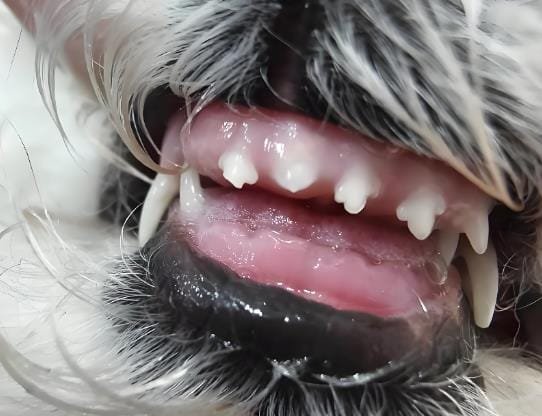
- Puppies start getting baby teeth at about 3 weeks
- They have all their baby teeth by 6-8 weeks
- Teething (losing baby teeth, getting adult teeth) starts around 12 weeks
- Most puppies have all adult teeth by 6-7 months
- Chewing behavior can continue beyond that out of habit or boredom
Milo was about 4 months old when the teething was at its worst. That’s when I found the shoes. That’s when I was losing my mind.
By month 6, things had improved noticeably. By month 7, mostly better. But we still had occasional incidents until about month 9.
Knowing this timeline helped me in two ways:
First, I stopped panicking. When Milo was 5 months old and still chewing everything, I didn’t think something was wrong. I knew we were in the normal range.
Second, I adjusted my expectations. I stopped expecting perfection at month 4. Gave myself permission to still be managing the behavior at month 7.
This sounds small. It wasn’t. So much of my stress came from thinking we should be further along than we were. Once I accepted that this was a months-long process, not a weeks-long one, I relaxed. And Milo picked up on that.
Stressed humans make stressed dogs. Calmer humans make calmer dogs. I needed to be the calmer one.
7. Knowing When to Worry (Because Sometimes It’s Not Just Teething)
Most chewing is normal. But not all of it.
I learned this when Milo started chewing his own paws. Not just licking. Actually chewing. Like he was trying to get something off.
I panicked. Called my vet. Turned out it was allergies, not teething. Different problem, different solution.
Here are the signs that it might be more than teething:
- Chewing that causes bleeding or injury (to the dog or to people)
- Obsessive chewing of the same spot (could indicate pain or skin issues)
- Chewing accompanied by other symptoms (vomiting, diarrhea, lethargy)
- Sudden increase in chewing in an older puppy who was previously trained
- Chewing that doesn’t improve with redirection and appropriate toys
Also: if your puppy is swallowing things they shouldn’t, that’s an emergency. Socks. Underwear. Small toys. Pieces of packaging. These can cause blockages.
I learned the signs of a blockage:
- Vomiting (especially repeated)
- Not eating
- Lethargy
- Abdominal pain
- No bowel movements
We never had a blockage. But I knew what to watch for. And that knowledge gave me peace of mind.
My vet also told me that if chewing seems excessive even for a teething puppy, it’s worth a checkup. Sometimes there’s an underlying dental issue. Sometimes it’s anxiety. Sometimes it’s just a very determined puppy.
But it’s okay to ask. That’s what vets are for.
The Days I Wanted to Give Up
I should tell you about the hard days. Because they happened.
There was this one Saturday, maybe when Milo was 5 months old. I’d had a rough week at work. Was tired. Just wanted to relax.
Milo had other plans.
He chewed through a curtain cord. Found a way into the laundry room and shredded a basket of clean clothes. Knocked over a plant and ate some of the leaves (non-toxic, I checked, but still).
I sat on the floor. Surrounded by destruction. And I cried. Not dramatic sobbing. Just this quiet, exhausted crying where you wonder if you made a huge mistake.
My partner came home early. Found me there. Didn’t say anything at first. Just sat down next to me.
Then he said, “Remember when we talked about getting a dog? You said it would be hard. You said there would be days like this.”
I nodded.
“So nothing’s wrong. You’re just doing the thing you said you’d do.”
I think I needed to hear that more than I needed another training tip.
Progress wasn’t a straight line. Some weeks felt like we’d forgotten everything we’d learned. I’d get frustrated. I’d wonder if I should just keep him crated all the time. That felt like failing him, but also, the constant cleaning was wearing me down.
My vet tech friend told me something that stuck: regression doesn’t mean you failed. It means you keep going.
So we kept going.
Where Things Stand Now
Milo is 14 months old now. He’s been mostly chew-free for about three months.
Mostly.
Last week I found one shoe with tooth marks. Just one. I looked at him. He looked at me. We both knew what had happened.
I didn’t yell. Just picked up the shoe. Put it away. Gave him a toy instead.
He took the toy. Went to his bed. Fell asleep.
That’s different from before. Before, he would have hidden the shoe. Or looked guilty. Or run away. Now he just… accepts the redirection. Like he knows the rules and mostly chooses to follow them.
I still keep frozen washcloths in the freezer. Still rotate his toys. Still puppy-proof when we have guests with kids. Some habits stick.
But I can leave my shoes by the door now. I can have plants on lower shelves. I can work from my living room without watching him every second.
It’s not perfect. It’s better.
Last month we went to my parents’ house for a weekend. Milo stayed in their guest room overnight. No accidents. No destruction. My mom called me the next morning, surprised.
“He was so good,” she said. “I forgot he was even there.”
Six months ago, that sentence would have made me cry with relief. Now I just smiled. Said thanks. Hung up.
Normal things feel like victories when you’ve been through the teething phase.
Quick Reference: What Actually Worked for Us
| Remedy | Cost | Effectiveness | Notes |
|---|---|---|---|
| Frozen washcloths | $0 | High | Best value, replace frequently |
| Rubber chew toys | $15-30 | High | Rotate every few days |
| Frozen treats | $5-10/week | Medium-High | Watch for stomach issues |
| Redirection training | $0 | High | Takes consistency, time |
| Puppy-proofing | $50-100 | High | One-time effort, ongoing maintenance |
| Timeline awareness | $0 | Medium | Reduces stress, not a direct fix |
| Vet checkups | $50-150 | High | For concerning symptoms only |
If You’re Reading This at Midnight
I see you. I’ve been there.
It’s 12:37 AM. Your puppy is whining. You’re not sure if it’s teething pain or just attention. Your hands hurt from prying something out of his mouth earlier. You’ve googled “how long does puppy teething last” at least three times today.
You’re wondering if you’re cut out for this.
Here’s what I’d tell myself if I could go back to that Wednesday with the shoes:
This isn’t forever. Your puppy isn’t broken. You’re not failing. Some days will suck. That’s okay. Small progress is still progress.
And please, don’t beat yourself up. You’re both figuring this out together. Your puppy isn’t chewing to make your life difficult. They’re doing the best they can with what they understand.
It’s on us to help them understand better.
Milo’s asleep on the floor next to me right now. Occasionally twitching in his sleep. Probably dreaming about chasing something. He’s quiet. I’m quiet.
Fourteen months ago, I didn’t think this was possible.
It is. One frozen washcloth at a time.
One More Thing
Someone asked me last month how long the teething phase lasted. I said about six months of intense chewing, then gradual improvement. They looked disappointed. Said their friend’s puppy was done in three.
Here’s the thing I didn’t say out loud: I don’t care about their dog.
This is Milo. He learned at his pace. We learned together. And now when I walk into my living room, I don’t look at the floor first.
I look at him.
And that’s enough.


Leave a Reply
You must be logged in to post a comment.